


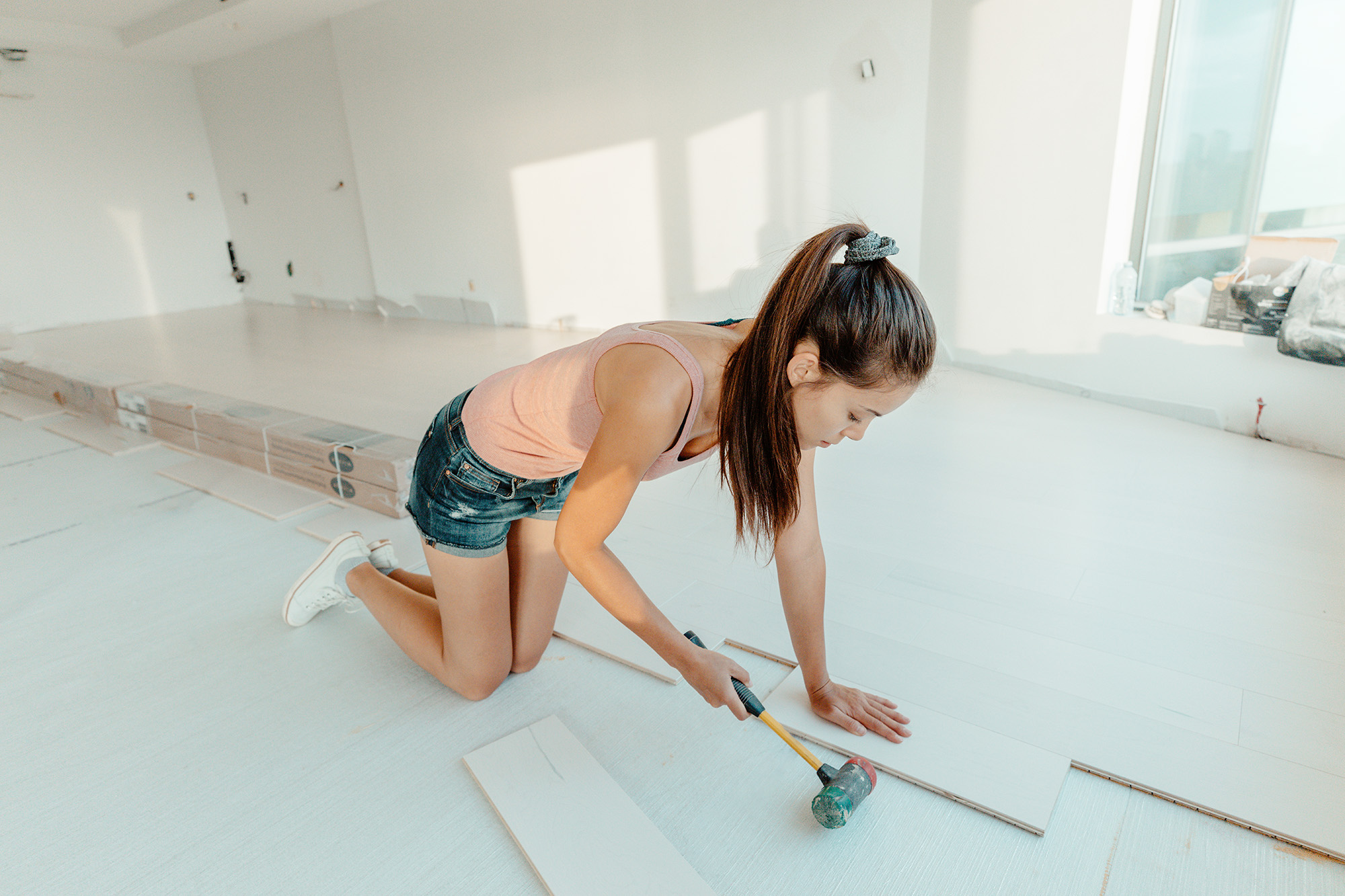
Online video tutorials make floor replacement look like an effortless weekend project you can finish before Sunday dinner. In reality, the easiest flooring to install yourself comes down to specific product engineering, material weight, and the fastening methods built into each plank. While modern floating floors feature forgiving designs for handy homeowners, traditional surfaces possess structural properties that call for professional trade skills and heavy machinery.
Scale plays a major role across single-story homes in Sparks and Spanish Springs. Troweling glue or clicking planks together in a compact laundry room is one thing, but running continuous flooring across a sprawling great room and kitchen is another. Wide spans call for dead-straight starter lines and hours of physical labor on your knees. Before you commit to a purchase, you need a clear understanding of what makes certain materials manageable for a weekend project and why others justify hiring a full-service crew.
Easiest Flooring to Install Yourself
Luxury vinyl plank and laminate earn their reputation as the most approachable flooring categories because manufacturers engineer them to eliminate the hardest parts of traditional floor laying.
Dry click-lock milling: Precision-milled tongue-and-groove profiles snap together edge-to-edge without sticky trowel glues, messy solvents, or pneumatic fasteners.
Score-and-snap cores: Rigid stone-polymer cores allow you to score the top wear layer with a standard utility knife and cleanly snap the plank across your knee, eliminating airborne sawdust and noisy power saws inside your house.
Pre-attached underlayment pads: Integrated acoustic foam backing removes the step of buying, unrolling, and taping down separate padding across your subfloor.
Lightweight manageable cartons: Planks arrive in lightweight, compact boxes that you can easily carry through tight hallways and transport in a standard vehicle.
These built-in characteristics give floating floors a clear advantage in a simple spare bedroom or home office. The material forgives minor hand tool errors and moves independently over your subfloor, which helps absorb standard seasonal shifts during dry northern Nevada winters.
Hardest Flooring Materials to Install
Solid hardwood and wall-to-wall carpet sit on the opposite end of the spectrum due to their physical weight, lack of built-in fasteners, and zero tolerance for error.
Solid wood planks lack click-together joints. Each piece calls for high-pressure pneumatic floor cleats driven through the tongue at a strict angle into wood subfloors. Natural wood fibers also react continuously to high-desert climate swings. Planks expand and contract across the grain, which calls for deep trade knowledge of board spacing, acclimation balance, and precise chalk-line layout to keep rows straight across large rooms.
Wall-to-wall carpet presents severe physical challenges because the carpet backing has no structural shape until it locks under intense mechanical tension. Achieving that flat surface calls for heavy commercial power stretchers that leverage wall studs to pull the carpet taut across tack strips. Without proper mechanical tension, the heavy woven rolls buckle and develop loose waves across high-traffic hallways.
Compare DIY Savings Against Professional Installation
Tackling a project on your own looks like an immediate way to trim your budget, but the balance between self-installation and hiring a professional crew involves several practical factors.
Tool overhead and carton waste: You need specialized tapping blocks, heavy pull bars, jamb undercut saws, and precision cutting tools. Purchasing these tools and buying extra material boxes to cover miscuts reduces your initial savings.
Time investment and household disruption: Professional crews clear rooms, prep subfloors, and lay complete living spaces in two to three days. DIY installations often stretch across multiple weekends, leaving your furniture crowded into the garage.
Long-term investment protection: Professional installation provides direct labor warranty protection and protects your manufacturer coverage. An experienced crew ensures proper perimeter expansion space so your floor floats smoothly without buckling down the road.
Trust the Professionals at Frankful Flooring
Hiring our in-house crew removes the physical strain, tool rental expenses, and guesswork from your home improvement plans. We manage every phase of your project from start to finish, including moving heavy furniture, hauling away worn carpet, flattening subfloors, and nailing down clean baseboards. Stop by our showroom at 100 East Glendale Avenue in Sparks to review durable plank and carpet samples in person, or contact us to schedule your in-home measurement and project estimate.


